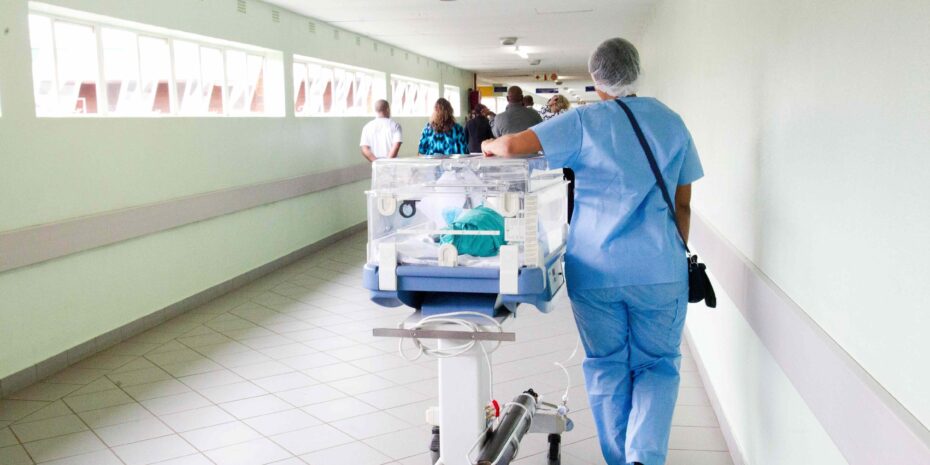
Paediatric intensive care at a major Western Sydney hospital has benefited from a sophisticated modelling tool developed by the Sax Institute.
The model simulates the flow of patients through the Paediatric Intensive Care Unit (PICU) at The Children’s Hospital at Westmead (CHW) – the largest of its kind in New South Wales.
A key reason for the need to model patient flows at the PICU is to predict and manage future demand for state level services requiring paediatric critical care admission in NSW, including for cardiac patients.
“With the high number of patients needing the PICU, we weren’t always able to ensure a bed was available for cardiac patients needing intensive postoperative care. This created challenges for us in ensuring surgery could go ahead as originally planned,” says Dr Marino Festa, a senior staff specialist and co-lead for Kids Critical Care Research at The Children’s Hospital at Westmead.
“We started to wonder how we could reconfigure resources to address these challenges and minimise impact on our families, as well as our staff.”
Dr Festa says one idea was to ringfence beds in the PICU for cardiac patients, but the team wondered what effect that would have for cardiac patients as well as all other patients needing admission to the unit.
“We knew modelling had been used in adult ICUs, particularly during COVID, so we understood there was potential to model our patient flows. But we needed more granularity, particularly around the staffing needed and the specialist nurses needed to manage care in PICU.”
Using funding from Hearts and Minds Investments charity, the team worked closely with the Sax Institute to develop modelling using six years of data on patients who had come through the PICU – their diagnoses, the therapies and complex support they needed, the chance of surgery being cancelled for particular types of patients, the duration of treatment, staffing needs and more in order to fully map the patient journey through the care process.
This type of modelling, known as discrete event simulation (DES) modelling, provides insights into complex systems and identifies where to best target efforts to improve outcomes.
“We wanted to know whether the modelling could replicate a fictitious year that would reflect what we saw in the previous six years. We got a very accurate model that was immediately helpful,” Dr Festa says.
“It was great to see we could create a model that reflected reality, which meant we had a safe way of testing new ideas or system changes without the risks of having to implement them in real life. The model showed us the overall impact of ringfencing beds just for cardiac patients and helped us decide this was probably not the most effective way to use our current resources.”
A new, larger PICU is being built at Westmead, and a new phase of the Sax Institute modelling will be used to study the impact of increasing bed numbers and creating subspecialty care areas for cardiac and other patient groups, Dr Festa says.
“What modelling has given us is the ability to see the whole system more clearly and the overall effect of inflows and outflows of patients, which is not always so easy when you’re working at the coalface. It’s also given us a shared language and objectivity that we can use with clinicians, heads of departments and the Ministry of Health to better understand the benefits of adding resources and getting the best outcomes in the most efficient way.”
This project not only showcases the successful application of simulation in tackling real-world healthcare management problems but also sets a precedent for employing DES as a strategic tool in health service planning.
Building on this success, The Sax Institute plans to use the same process to create models for entire hospital facilities, aiming to develop a hospital ‘digital twin’ which will optimise hospital operations and improve patient care outcomes.
Learn more about the Sax Institute’s decision support tools here.