


A significant challenge in rural and remote areas is a lack of access to primary care. Many communities don’t have enough GPs to service their population, and some no longer have any GPs at all.
New programs in NSW are tackling this problem with collaborative approaches to healthcare, where communities are supported to develop their own solutions.
The Sax Institute recently evaluated the positive impact of one the new programs, the 4Ts model, and made recommendations for scaling these kinds of models for greater impact. The 4Ts model is named after the four rural towns in Central West NSW that it services – Trangie, Tottenham, Tullamore, and Trundle.
The program began in 2019, after the last private general practice shut down in the region. The program allows a single employer, Western NSW Local Health District (WNSW LHD), to organise health professionals to work across all four towns.
Working closely with WNSW LHD and other stakeholders to evaluate the effectiveness of the 4Ts model, the Sax Institute drew on primary care data and hospital data, as well as qualitative data from interviews with patients, heath care workers and developers of the model.
The evaluation found that the 4Ts model increased community access to GP services in all four towns, and that patient-reported experiences of care were higher than the NSW average. The model was also found to have contributed to a decrease in emergency department presentations for non-urgent care.
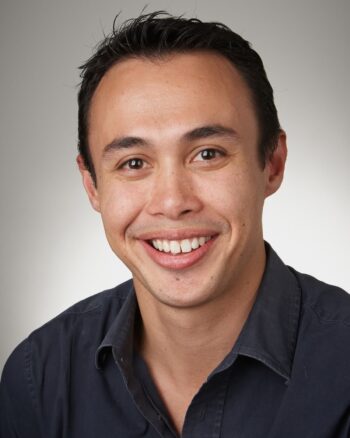
Dr Shannon Nott, former WNSW LHD Director of Rural Medical Services, said that the evaluation will help other NSW communities facing similar issues.
“The 4Ts model is vital in addressing the escalating challenges of primary care sustainability in rural and remote communities,” Dr Nott said. “This evaluation provided critical insights into its effectiveness over the past four years, delivering networked primary and acute care services in towns where the private primary care market had faltered.”
Dr Alice Knight, Director of Evaluation and Evidence Services at the Sax Institute, said that it was fantastic to help demonstrate the impact of the 4Ts model.
“My family live in rural NSW and have experienced challenges accessing GPs and other healthcare, so it was really exciting to work on such an important and innovative project, that will have huge benefits for the people of rural NSW.”
The Sax Institute also conducted a scalability assessment for Collaborative Care and place-based planning approaches to healthcare, which included the 4Ts model along with four other programs, for the Regional Health Division of the NSW Ministry of Health. The learnings of the scalability assessment are being applied through the expansion of collaborative and place-based approaches to healthcare in five new regional NSW communities.
PUBLICATION DATE
22 January 2025
